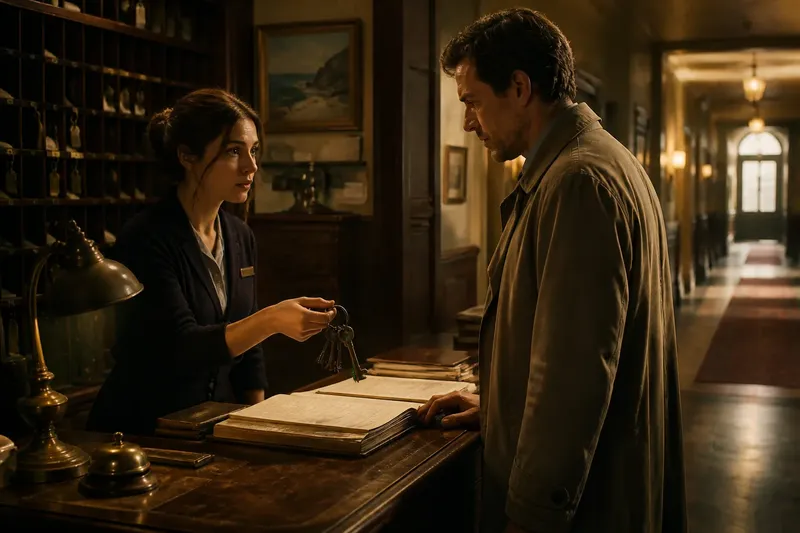
A Held Look or a Quick Gesture: Two Ways to Play Recognition
A held look or quick gesture in a recognition scene gives viewers different clues. Shape the performance so its timing invites a specific inference.
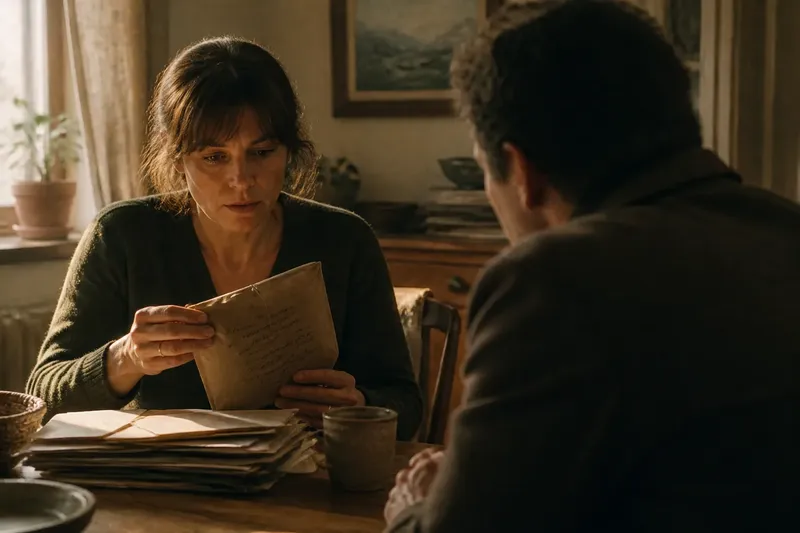
A held look or quick gesture can make recognition feel like a private discovery or a fact the character must act on at once. In performance, the difference lies not only in how much the actor moves, but in what the audience is asked to infer during the movement—or the pause before it.
A character might recognise an old friend across a crowded station, notice a familiar object in an unfamiliar room, or understand who has been speaking from behind a door. The actor’s timing determines whether viewers see recognition arrive gradually, read it in the body as a sudden decision, or remain unsure what has been understood. A useful rehearsal plan gives each choice time to develop and tests what the viewer can actually read.
Begin the week by naming what recognition changes
Before choosing a look or gesture, write down what becomes different for the character at the instant of recognition. Do they realise they are safe, discover a betrayal, remember an obligation, or identify someone they hoped never to see again? The audience needs some legible change, but it does not need to receive every part of the character’s thought.
Separate three things that can easily be confused: the clue, the recognition and the response. The clue is what the character sees or hears. Recognition is the mental connection: this person is the missing witness, or that handwriting belongs to their sister. The response is what the character does with that knowledge. A performance may show one clearly while keeping another private.
On the first rehearsal day, make a small table with those three headings. Under each, write one plain sentence for the scene. For instance: “The clue is a chipped green cup”; “the character recognises the cup from their childhood kitchen”; “they decide not to reveal that they know.” This makes the performance problem specific. The actor is not simply asked to “look surprised”; they are playing a change in knowledge and choosing what to do with it.
Use an early reading to find the scene’s pressure
On the next day, read the scene at its ordinary pace without adding a designed reaction. Mark the exact word, sound, or visual detail that triggers recognition. Then note what puts pressure on the character: another person may be watching, the conversation may be continuing, or the character may have to answer before showing their hand.
This pressure matters because the same recognition can call for different outward behaviour. Someone who is alone may allow a thought to show slowly. Someone being questioned may conceal it, even if the discovery is startling. Ask what the character wants the other person to believe. That objective often gives a more playable direction than an emotion label.
Keep the trigger precise. If recognition follows a line of dialogue, agree which word lands the thought. If it follows an object being turned towards the character, identify the moment the object becomes visible. This is not a demand for mechanical timing. It gives the actor and director a shared point from which they can adjust the performance, rather than trying to correct a vague impression after each run.
Rehearse the held look as an unfolding thought
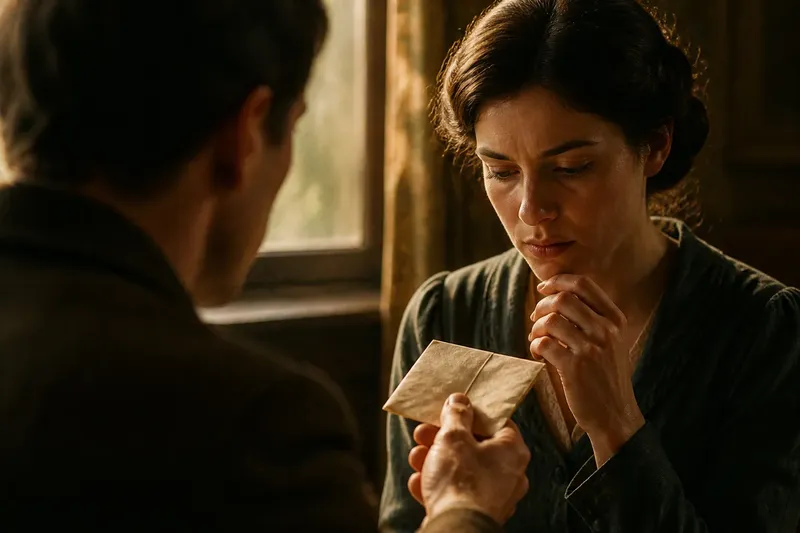
During the middle of the week, try the restrained version. The actor receives the clue, holds their attention on it, and allows the thought to register without adding an immediate nod, reach, recoil or change of posture. “Held look” does not mean a blank stare. The eyes may focus, refocus or settle; the face may change in a small way. The essential choice is to let the audience watch the character attend to the clue before seeing what they will do about it.
One way to develop this is to rehearse three internal beats: noticing, connecting, and deciding whether to show the connection. These beats need not be separated by equal pauses, or be visible as separate expressions. They help the actor avoid signalling the answer before the audience has had a chance to read the clue.
A held look can invite viewers to infer that the character is searching memory, testing a possibility, or concealing a conclusion. It can also preserve uncertainty: perhaps the character recognises the object but does not yet know why it matters. The restraint is useful when the scene benefits from the audience sharing the character’s process rather than receiving a clear declaration of intent.
During rehearsal, watch for a pause that has lost its purpose. If nothing changes in the actor’s attention, a long look can feel like waiting for the next line. Ask the actor what they are checking in the other person or in the clue. A slight shift of focus may then carry thought without turning into an illustrative gesture.
Rehearse the quick gesture as a decision made visible
On a later rehearsal day, explore a decisive gesture. It might be the character turning a photograph face down, moving between two people, closing a hand around a key, or pointing to the person they have recognised. The gesture should arise from the character’s new knowledge and pursue an immediate aim. It is not simply a larger version of the held look.
Ask what the movement accomplishes in the scene. Does it stop someone leaving, hide evidence, claim an object, or direct another person’s attention? When the gesture changes the situation, recognition becomes visible as action. The audience can infer that the character has made a connection because the body responds to a particular consequence of that connection.
Say you are staging an invented scene in which a woman recognises her neighbour’s handwriting on a parcel while a visitor waits for an answer. With a held look, she might study the lettering, glance towards the neighbour’s empty chair, and delay speaking; the viewer can infer that a memory is forming, while the character’s certainty remains unclear. With a quick gesture, she might slide the parcel beneath a stack of papers before answering; the viewer can infer that she recognises the handwriting and wants to keep the discovery from the visitor. The same clue produces different information because the action reveals a different immediate intention.
Keep the gesture proportionate to its purpose. A hand moving towards a door may be more revealing than a dramatic recoil, if the character’s first concern is escape. As with placing a bookmark, a small movement can show exactly where attention has landed; its meaning comes from its relation to what happened just before.
Compare the two choices against the scene’s point of view
Near the end of the week, run the same passage once with the held look and once with the quick gesture. Keep the dialogue, blocking and pace as consistent as practical, then discuss what each version makes clear and what it leaves open. The useful question is not which performance looks stronger in isolation. It is which version gives the audience the right information at this moment.
Consider the scene’s point of view. If the audience should share the character’s uncertainty, a restrained look can keep the discovery in progress. If the plot depends on the audience recognising an immediate change in intention, a decisive gesture may communicate it efficiently. If viewers know more than the character, neither choice needs to explain the clue; the performance can instead reveal whether the character is catching up.
Also consider the other performer. A quick gesture gives a scene partner something concrete to respond to: a blocked path, a hidden object, a pointed accusation. A held look can put pressure on a partner without spelling out why, especially if that person notices the attention and becomes guarded. The partner’s response can either confirm the audience’s inference or complicate it.
Review the performance across a week of rehearsals
Use a simple routine to keep the comparison grounded in what viewers can perceive:
- First day: Write down the clue, the recognition and the character’s next objective.
- Second day: Read the scene plainly and mark the trigger and the pressure around it.
- Third day: Rehearse the held look, keeping attention active and the conclusion partly private.
- Fourth day: Rehearse a gesture that changes the character’s immediate situation.
- Fifth day: Compare both versions, noting what viewers can infer and what remains unclear.
- Final rehearsal: Choose the version that serves the scene, then adjust its timing and scale without adding a second signal that repeats the same information.
For the review, ask a small group of observers what they believe the character noticed, when they think the character understood it, and what they expect the character to do next. Treat their answers as a reading of the performance, not a verdict. If every response points to an unrelated idea, the cue may be too obscure. If the scene requires uncertainty, differing interpretations may be useful rather than a problem.
Questions actors and directors ask about recognition scenes?
How long should a character hold a look?
Hold it for as long as the character is actively taking something in, not for a fixed beat count. The pause can end when attention shifts, a decision forms, or the scene’s pressure forces a response.
Does a quick gesture always make recognition obvious?
No. Viewers need a clear relationship between the clue and the action. A sudden movement with no apparent purpose may read as alarm or impatience rather than recognition.
Can a character recognise something without showing it?
Yes. The performance can keep recognition internal while a deliberate lack of response becomes meaningful in context. A withheld reaction is most legible when the audience can see what the character is choosing not to reveal.
Should the actor show the clue’s meaning on their face?
Only if that suits the scene’s point of view. A small change in attention may be enough; the actor can let the next choice, rather than an explanatory expression, show what the clue has come to mean.
Return to the central decision when the scene still feels vague: should viewers watch recognition take shape, or infer it from what the character does next? A held look makes room for thought; a quick gesture gives thought an outward consequence. In either case, a clear trigger and a specific objective help the audience read the performance without forcing the character to explain themselves.