The Reveal Works Because the Clues Came First
A satisfying film reveal reorders earlier details rather than adding hidden facts, giving viewers a fair surprise and a clear path to reconsider the story.
A satisfying film reveal changes what earlier clues mean; it does not supply a crucial fact the viewer had no chance to notice. That distinction is the difference between surprise that invites a second look and a twist that feels like the story has changed its rules. The clues need not make the answer obvious. They need to be present, legible and open to more than one interpretation.
Imagine a small, invented mystery set in a coastal hotel. A night clerk, Mara, tells a visiting inspector that she has never entered the locked records room. Later, the inspector discovers that a ledger has vanished from inside it. The reveal will be that Mara removed the ledger before the inspector arrived, not that a stranger somehow bypassed the lock. To make this turn fair, the film must give viewers evidence of her access and motive while allowing them to read that evidence another way.
Build the reveal around a fact the story has already shown
The first decision is what the reveal changes. In this case, the answer is not simply “Mara did it”. The deeper change is that her earlier claim about never entering the records room was a deliberate lie. That makes the audience reconsider her account, but it does not erase the visible events that led to the discovery.
A useful distinction is between new information and new meaning. New information adds a fact: perhaps the hotel has a second records room that the film never mentioned. New meaning reframes a fact already shown: Mara says she has never entered the room, then later recognises a stain on its floor before the inspector points it out. The second approach lets viewers replay the story in their minds and see how the parts fit.
Choose the reveal’s central fact early, then work backwards to identify what the audience must have seen. The film need not state the answer outright. It does need to establish the conditions that make the answer possible. If Mara can reach the room, the story should show how she could do so. If she has a reason to take the ledger, her concern about its contents should appear before the reveal, even if that concern initially seems personal or routine.
Give each clue a plausible first reading
A clue does its best work when it supports two readings. On first viewing, it fits the apparent story. After the reveal, it fits the concealed one more closely. A detail that only makes sense after the answer is known is not a clue so much as withheld explanation.
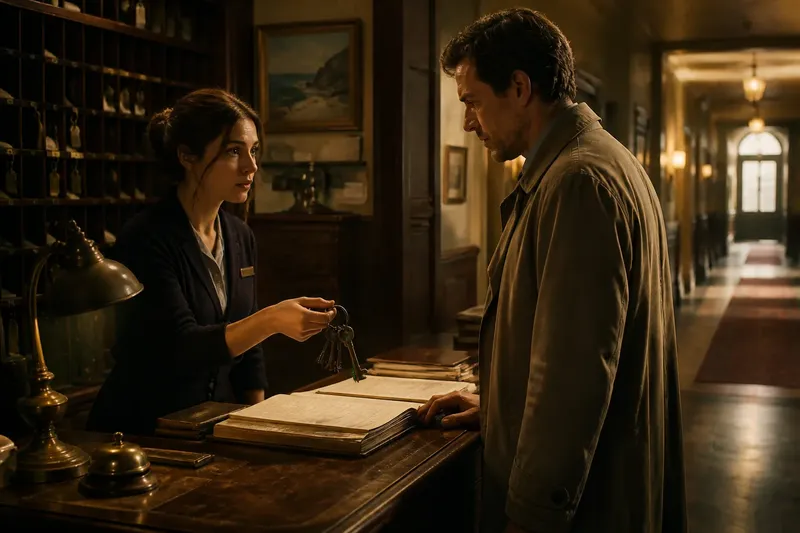
In the hotel story, the inspector asks Mara for the records-room key. She hands over a ring and says the room has been locked since the previous evening. Among the keys is an old brass key with a strip of green thread around its head. The inspector tries a newer key first, so the brass one appears to be an irrelevant spare. Later, the inspector notices that a green thread has caught on the records-room lock.
The clue is not the thread alone. It is the combination of a key that could fit the room, Mara’s access to the key ring and the thread left at the lock. On the first viewing, the thread may suggest that the inspector has found a clue pointing towards a former employee. After the reveal, it becomes a trace of Mara’s own key. Each detail carries its ordinary meaning, but their relationship changes.
That balance resembles a familiar object such as a house key: it is unremarkable on a table until a locked door gives it a purpose. A film can place a detail in view without announcing its future importance. The framing, dialogue and action should still give the viewer a fair chance to register it.
Distribute clues across different kinds of evidence
If every clue is a suspicious line of dialogue, viewers may feel that the film is asking them to solve a verbal puzzle rather than watch a story unfold. Spread evidence across action, objects, space and relationships. The clues can remain modest, but they should not all depend on the same kind of attention.
For the hotel mystery, three strands can support the same answer:
- Access: Mara handles the key ring while helping the inspector, placing the brass key within her reach.
- Knowledge: Before seeing the ledger’s empty shelf, she says the ledger is “back in its place”, then corrects herself and calls it a record book.
- Motive: She asks whether the inspector plans to read the ledger’s entries about the hotel’s staff, but the conversation first plays as concern for a colleague.
Each strand has a credible surface explanation. A clerk would handle keys. She might know where records belong. She could be protective of a colleague. Together, however, they create a pattern that the reveal can sharpen. If one clue is missed, the others still give the ending a basis; if all are noticed, they should suggest a question rather than settle the answer too soon.
This is where proportion matters. A trail of clues should be discoverable without turning every scene into a conspicuous signal. If the camera gives the brass key a dramatic pause, the audience may infer its importance immediately. If the key is buried among a dozen indistinguishable props and never clearly seen, the later accusation can feel unfair. The film needs to direct attention gently, not hide the evidence in plain sight as a trick.
Let the reveal change the weight of earlier scenes
The reveal should do more than identify the person responsible. It should alter how the viewer understands a relationship, choice or consequence. That emotional change gives the puzzle a reason to exist beyond the satisfaction of guessing correctly.
Say the inspector has been treating Mara as a helpful guide. During their walk through the hotel, she insists on taking a corridor that avoids the records room. At first, this seems considerate: the inspector is carrying a case and the longer route has a lift. After the reveal, the detour looks like an attempt to keep the inspector away from the door and the lock. The action has not changed. Its purpose has.
For the turn to carry emotional force, the viewer should understand why Mara acted, even if the action was wrong. Perhaps the ledger contains evidence that could expose a colleague who has been blamed for a theft. Her choice to remove it then has a motive, but it also creates harm: the inspector cannot distinguish her protection of someone from her concealment of her own role. The story becomes richer because the reveal revises both the mystery and the relationship.
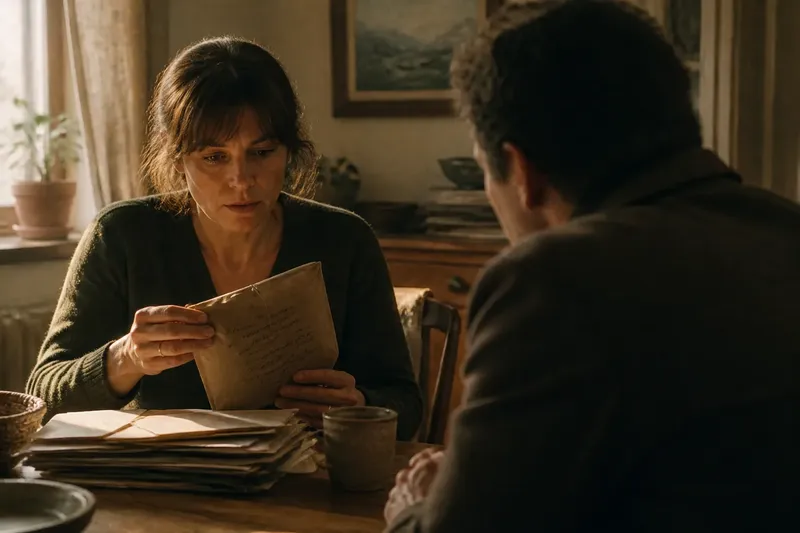
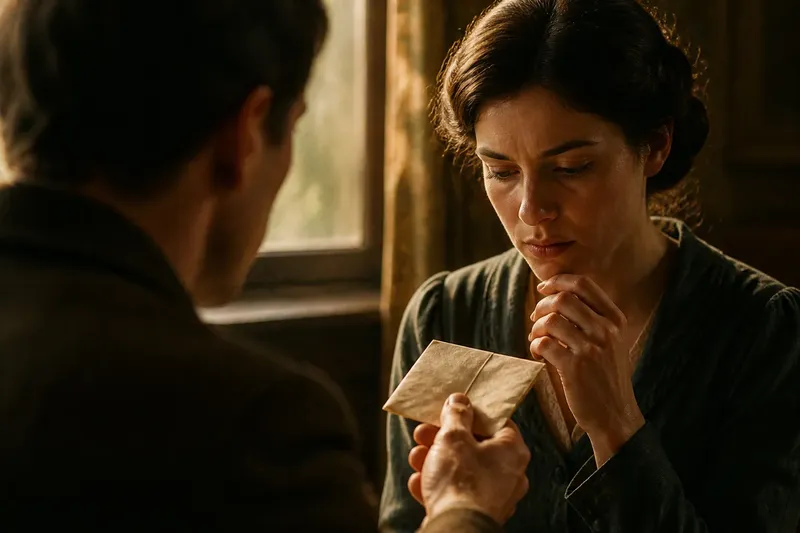
A weak reveal often explains everything in a single speech. The character lists the hidden action, the motive and the clue trail, while the audience waits for the scene to end. Instead, let the evidence do part of the work. The inspector might lay the green thread beside the brass key and ask why Mara called the ledger a record book before seeing the empty shelf. The questions join details the film already established; Mara’s response can then deepen or complicate their meaning.
Make the solution clear without making it inevitable
Fairness does not require viewers to predict the ending. It requires them to recognise, after the reveal, that the story gave them enough to understand it. A strong solution feels surprising in the moment and coherent on reflection.
One way to judge that balance is to ask what the audience could reasonably infer before the answer. If the clues point only to Mara, the reveal may arrive too early. If they equally support several suspects, the eventual choice can still feel earned, provided the decisive evidence has been shown. But if the answer depends on an unmentioned passage, an unseen key or a special rule introduced at the last moment, the film is using information rather than reinterpreting evidence.
In the invented hotel story, the inspector should not discover that Mara has a secret master key after the ledger goes missing. That fact would solve the access problem by adding a new privilege. The brass key and thread already offer a more satisfying route. The audience can connect them to Mara’s movements, while the film preserves uncertainty about why she took the ledger.
There is a useful difference between withholding and ambiguity. Withholding leaves out a fact the viewer needs. Ambiguity gives the viewer evidence that supports more than one explanation. A reveal can resolve ambiguity, but it should not depend on withholding the basic mechanics of the event.
How can a writer tell whether a reveal is fair?
How many clues does a film need?
There is no fixed count. A reveal needs enough independent evidence to make its central claim understandable, while leaving room for an alternative reading before the turn. A key detail supported by a clue about access and another about motive often feels more grounded than several repeated hints of the same kind.
Should viewers be able to guess the answer?
They may guess, but prediction is not the only measure of success. The film should let an attentive viewer form a reasonable suspicion, not require every viewer to solve the mystery before the characters do. The answer should feel more convincing once the clues are gathered together.
What if a clue is easy to miss?
A clue can be subtle, but the story should provide another route to the same conclusion. If the entire reveal depends on a tiny detail visible for an instant, viewers may feel excluded rather than rewarded. Let later dialogue or action connect with that detail without simply repeating it.
Can a misleading clue still be fair?
Yes, if it points towards a plausible interpretation that the evidence supports at the time. In the hotel story, the green thread can initially implicate a former employee, provided the film has established that person’s access to the key ring. It becomes unfair if the apparent lead depends on a fact the film later changes or denies.
Use a revision pass to check the clue trail
Once the ending is drafted, review the story from the audience’s position rather than the character’s private knowledge. For each clue, ask what a viewer sees, what they might infer at that point and what the reveal will make them reconsider. If the first reading is implausible, adjust the scene so the detail has a natural surface purpose.
Then check the solution’s mechanics. Can the character reach the object or place involved? Does the film show the route, opportunity and relevant knowledge? Does the motive appear before it is needed? These questions are about story evidence, not about giving every secret away. A character can keep a motive private while the film still shows behaviour that later makes that motive intelligible.
Finally, remove clues that merely repeat the same message. Three scenes of Mara glancing nervously at the door may make her suspicious, but they do not add three different reasons to suspect her. A key in her possession, a revealing correction and a detour each contribute a separate piece of the picture. The viewer can then assemble a case rather than count hints.
The reveal works because the clues came first: not necessarily in a neat sequence, and not with bright markers around them, but as parts of the story’s ordinary surface. When the answer arrives, it should make the earlier scenes more precise, not make them disposable. For a writer shaping a film reveal, that is the useful test: the audience may be startled, but they should be able to look back and see the path they were already on.